


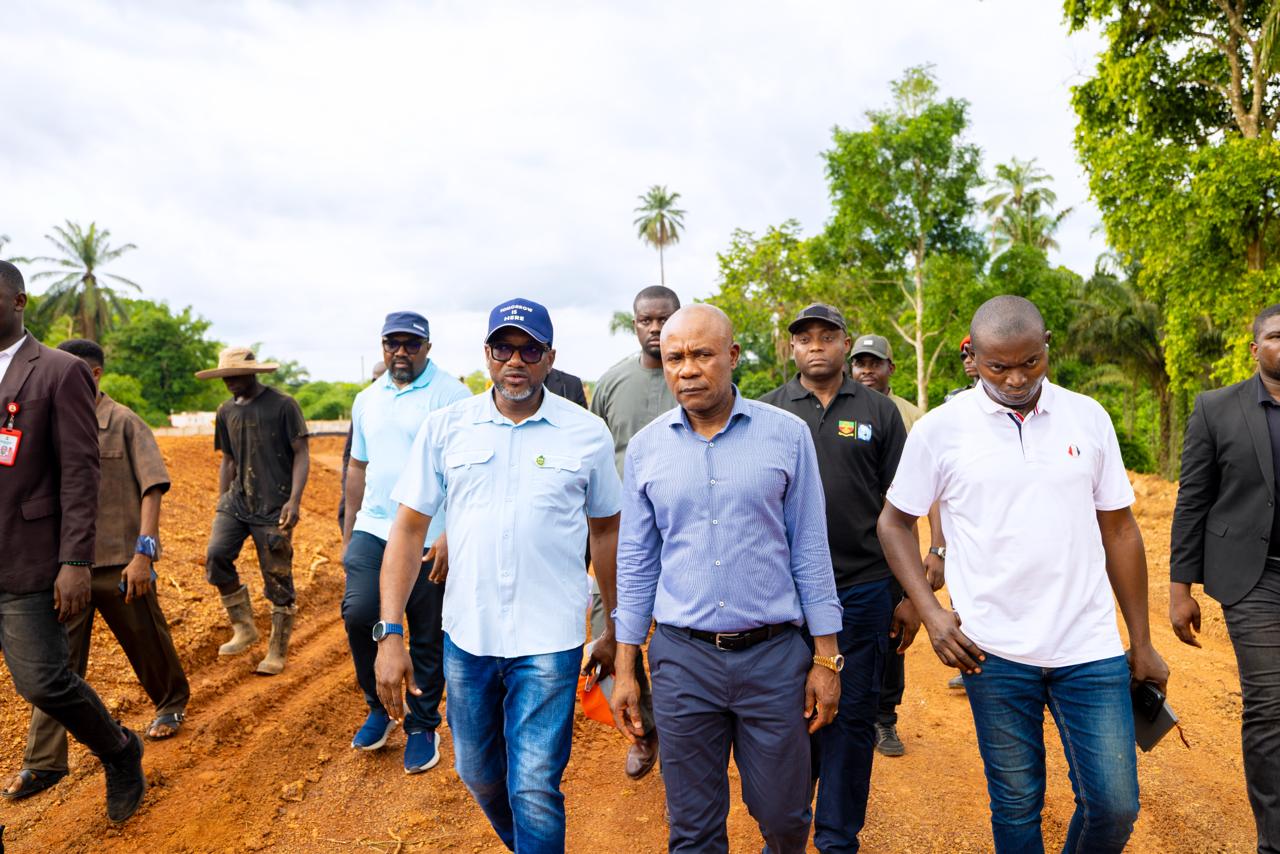
Gov. Mbah Inspecting the ongoing construction of the more than 40kms Owo-Ubahu-Ikem dual carriageway.
THERE is no meaningful development without infrastructure, and no infrastructure impacts the daily lives of the people more directly than roads. Roads connect communities, drive commerce, reduce travel time, improve security, attract investments, and open up rural areas for economic growth.
In Enugu State today, one of the most visible signatures of Governor Peter Ndubuisi Mbah’s administration is the aggressive push in road construction and reconstruction across the state.
From urban renewal projects to strategic rural link roads, the administration has continued to redefine the state’s infrastructural landscape.
Recently, I had cause to travel to Nsukka. I began my journey from Independence Layout through the Enugu–Port Harcourt Expressway and passed through Abakpa Junction.
What immediately caught my attention was the impressive level of work on the second lane of the Enugu–Onitsha Expressway, which has already been opened for use, as well as the ongoing construction of the flyover bridge at Abakpa Junction.
On getting to Penoks Junction, I became even more excited seeing the extent of the dualisation project stretching from the junction down to the flyover bridge at T-Junction as part of the ongoing dualisation of the Penoks–Opi–Nsukka Road by Governor Mbah’s administration.
Unlike in the past, when journeys to Nsukka were stressful and time-consuming, I arrived in less than 40 minutes.
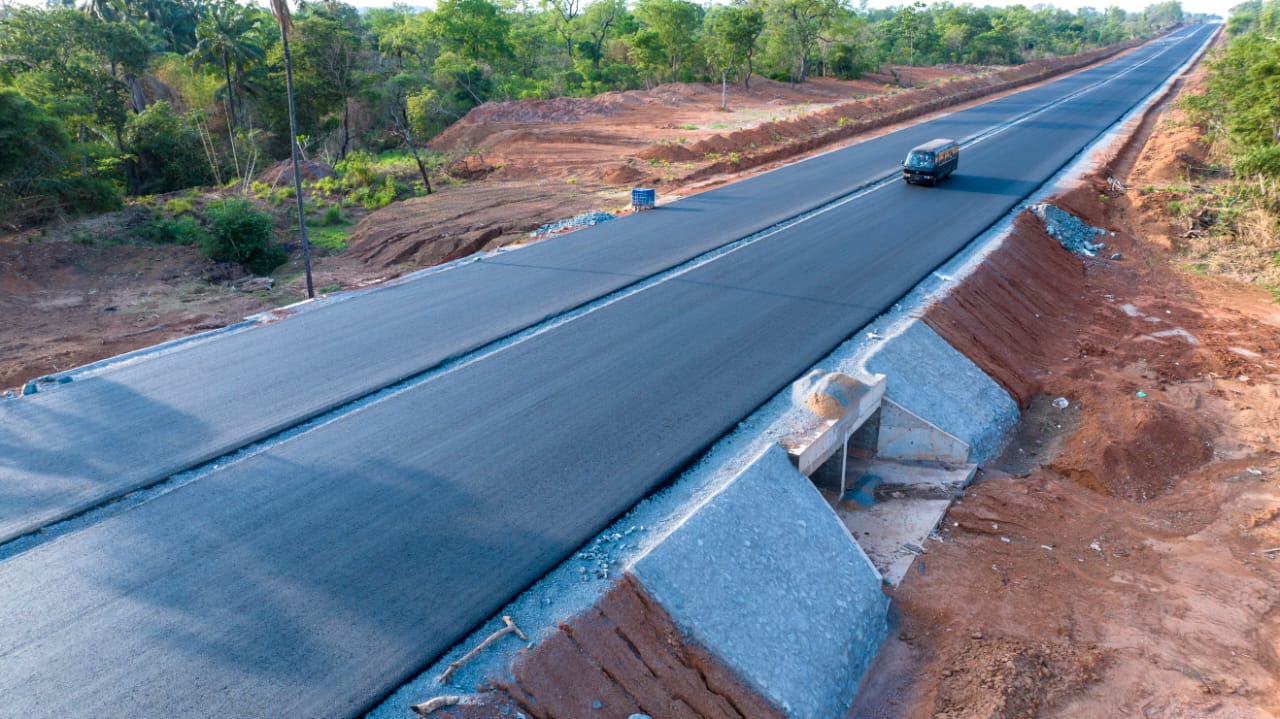 Apart from the already completed sections, construction work is progressing rapidly on other parts of the road, particularly from the Opi Nsukka Junction axis towards Enugu.
Just like every other road, Governor Mbah’s administration has constructed and reconstructed in the state, one remarkable feature of the project is the provision of proper drainage systems on both sides of the road to ensure easy flow of erosion and floodwater.
This was largely absent on the old road and had contributed significantly to its deterioration over the years.
Beyond eliminating the usual traffic congestion and gridlock associated with the route, the economic benefits and long-term impact of the dualisation of this strategic road cannot be overemphasized. It is a major gateway linking Enugu State to northern Nigeria and other parts of the South-East.
Also, during the grand finale of the Tomorrow Is Here Movement, the vibrant support group of Governor Mbah’s administration, held at Owo Junction last month, I took time to travel through the ongoing 44.5-kilometre dual carriage road being constructed from scratch from Owo Junction through Ubahu down to Ikem. The road, when completed, will serve as another major access route connecting Enugu State to Northern Nigeria, while opening up several rural communities to development and economic opportunities.
Across Enugu State, from urban centres to rural communities, I have personally driven through several strategic roads either under construction or undergoing rehabilitation by Governor Mbah’s administration, roads I never even knew existed from my undergraduate days in Enugu till date.
Despite the huge backlog of infrastructural deficits inherited from decades of neglect by successive administrations, even before the creation of Enugu State in 1991, Governor Mbah’s administration has performed remarkably well in critical infrastructure development, particularly in roads, schools, hospitals, and related sectors.
These projects are gradually transforming the developmental outlook of the state and positioning Enugu as an emerging investment destination.
From the outset, it was obvious that Governor Mbah came prepared for governance. This became even clearer on August 31, 2024, when he commissioned the Enugu State ultra-modern Mega Asphalt Plant, one of the best in the South-East region.
The plant was established specifically to tackle the high cost and logistical challenges associated with road construction, especially asphalt production, which constitutes a major component of road projects.
The establishment of this important facility has significantly accelerated the pace and quality of road construction across the state.
Aside from occasional delays caused by the rainy season, most of the roads awarded by the administration are progressing steadily. Importantly, none of the projects awarded by Governor Mbah’s government has been abandoned.
Construction activities are ongoing on virtually all of them, earning commendations from residents and indigenes alike.
Even as political activities ahead of the 2027 general elections intensify, with many politicians focusing more on strategies for electoral victory, Governor Mbah appears determined to allow his performance speak for him.
This perhaps explains why the administration has continued to award more strategic road projects across the state.
Among the recently flagged-off projects is the 52.2-kilometre Nsukka–Leija–Aku–Akpakumeze–Eke-Ebe Road, inaugurated during the Enugu North Mega Endorsement Rally in May 2026.
Other newly awarded projects include:
Beach Junction–Ovoko Afor Road, Nsukka
Enyichiru Barracks Junction Road, Nsukka – 1.2km Mechanic Road Barracks Junction, Nsukka – 1.15km
Ugwuachara Road, Nsukka – 1.55km
Ezeagu–Umumba–Orie Engine Ebenebe Road – 10.1km
Enugu United Palm Plantation (EUPP) Access Road at Ibite Olo, Ezeagu – 14.5km
Umabi–Umuaga Link Road – 3.6km
Eke Obinagu–Obodo Nike–Umuode–Oruku–Aguikpa–Amaechi Idodo Road – 18.23km
Obodo Ukwu–Inyi Road – 5.6km
Ehuhe–Achi–Umabi Road – 13.05km
Amanpunato Achi–Amoli Road – 16.47km
Altogether, these projects cover over 151 kilometres of roads across different parts of the state.
These are not just ordinary roads; they are economic lifelines. They will boost agriculture, enhance rural commerce, improve access to healthcare and education, reduce travel time, and strengthen connectivity between rural communities and urban centres.
That is why it is amusing to read the propaganda and misinformation being circulated by some sponsored social media hirelings attempting to downplay the achievements of Governor Mbah’s administration in road construction. Their aim may be to score cheap political points ahead of the 2027 elections, but facts remain sacred.
Even to the blind, it is obvious and indisputable that Governor Mbah’s administration has done remarkably well in road construction and reconstruction across Enugu State.
The administration has not abandoned any road project awarded so far and continues to initiate new projects despite growing political distractions.
The construction of the Mega Asphalt Plant at the early stage of the administration clearly demonstrated foresight, seriousness, and preparedness to tackle the long-standing challenge of deplorable roads across the state.
However, one undeniable reality remains: the infrastructural decay inherited over several decades is enormous.
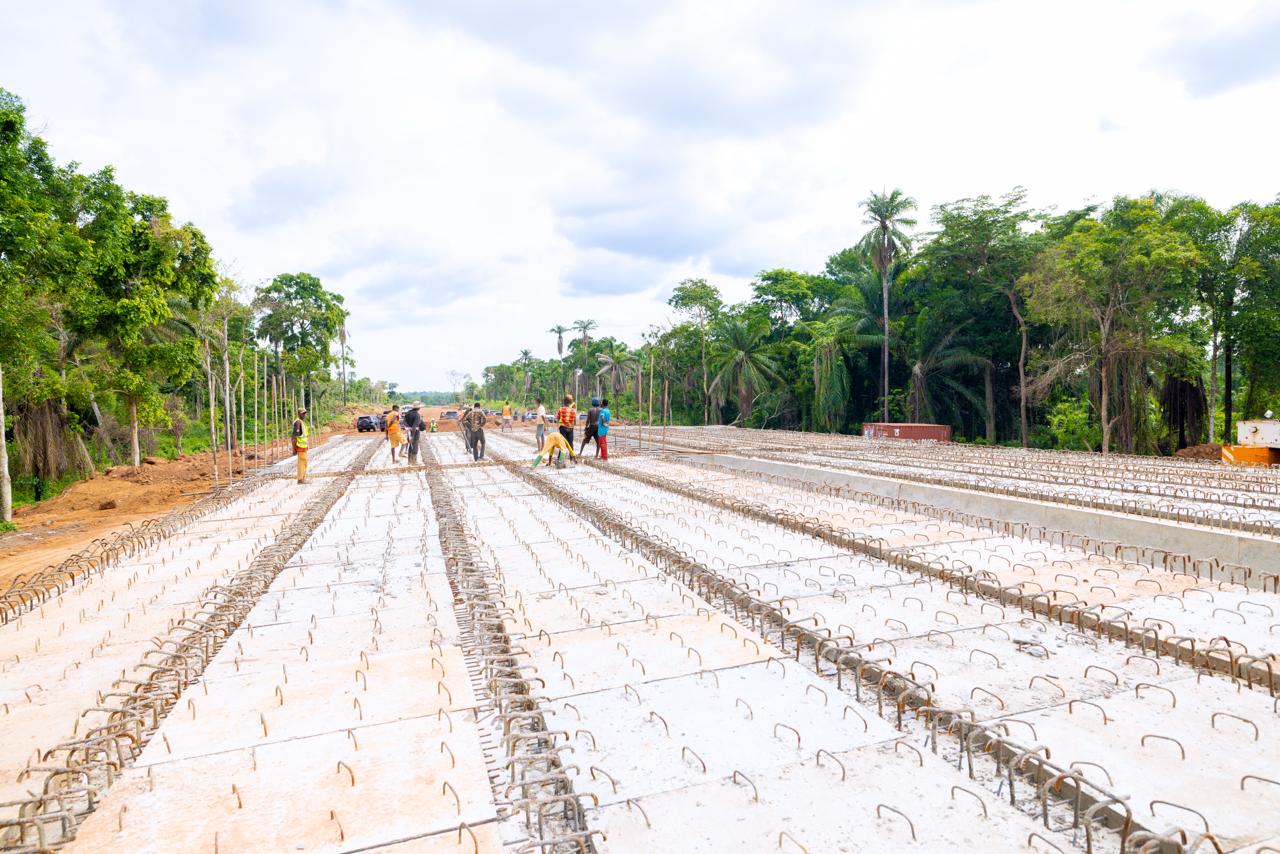 Even if Governor Mbah were given another eight years focused solely on road construction, it would still be difficult to completely erase the backlog of dilapidated roads across the state. That is simply the magnitude of neglect accumulated over the years.
Nevertheless, the progress made so far deserves recognition and appreciation. Road construction is highly capital-intensive and requires careful planning, technical expertise, and time to ensure durability and quality delivery.
Therefore, development should not only be assessed based on whether roads in one’s immediate community have been reconstructed. Governance must be viewed from a broader perspective.
In all fairness, Governor Peter Mbah’s administration has shown commitment, vision, and determination in addressing Enugu State’s infrastructural challenges.
The ongoing road revolution across the state is not merely about laying asphalt; it is about opening up communities, stimulating economic growth, improving the quality of life of the people, and laying a solid foundation for future generations.
Indeed, the roads are speaking for the administration.
Ezea writes from Independence Layout, Enugu State