Sunday, September 13, 2026
No menu items!
Home Blog Page 3

Landmine Explosion Targets Borno APC Candidate’s Convoy

0

An armoured police vehicle in the convoy of Borno APC governorship candidate, Engr. Mustapha Gubio, was badly damaged on Thursday evening after hitting a landmine suspected to have been planted by Boko Haram fighters.

The incident happened around 3rd September along the Gubio–Kareto–Damasak road as Gubio and his team were heading back to Maiduguri after a thank-you visit to Damasak town in Mobbar LGA. Damasak, a border community, is about 190km from Maiduguri.

According to a security source who asked not to be named, the insurgents had planted explosives on the route to target the convoy. The team had spent roughly 40 minutes in Damasak before beginning the return trip.

“On our way back, the terrorists had laid mines on the road. The lead armoured vehicle ran over one and it exploded,” the source said.

The blast was followed by an attempted ambush. However, security operatives in the convoy — made up of soldiers, police officers, and members of the Civilian Joint Task Force — quickly engaged the attackers and drove them back.

No deaths or injuries were reported among Gubio and his entourage. The police armoured vehicle bore the brunt of the explosion and was severely damaged.

The attack adds to growing concerns over safety on Borno highways, especially roads connecting northern and border communities.

As of the time of this report, authorities have not released an official statement on the incident.

Gov. Mbah Approves New Appointments To Key Institutions

0

Enugu state Governor Barr. Peter Ndubuisi Mbah, has approved the appointment of new members and principal officers to key state institutions.

The Secretary to the State Government (SSG) in a statement on Friday made available to SummitNews, described the appointments as part of the administration’s ongoing efforts to reform institutions, strengthen governance and enhance effective service delivery.

The appointments are as follows: be

CIVIL SERVICE

1. Prof. Gabriel Ajah — Chairman
2. Christian Mbah — Member One
3. Mrs. Stella Ekweremadu — Member Two
4. Mrs. Theresa Onyefuzili Ifeanyichukwu — Member Three
5. Uzonna Emmanuel Ogarabe — Member Four
6. Ambrose Nwodo — Secretary

ENUGU STATE TECHNICAL AND VOCATIONAL EDUCATION AND TRAINING (TVET)

1. Dr. Amaka S. Ngene — Chairman
2. Bonaventure Onu — Member
3. Barr. Nnadi Eluke — Member
4. Kingsley Agwu — Member
5. Mrs. Joy Odike — Secretary

ENUGU STATE UNIVERSITY OF SCIENCE AND TECHNOLOGY (ESUT) GOVERNING COUNCIL

1. Barr. Victor Chukwuani — Chairman
2. Engr. James Ifeanyichukwu Ajibo — Member
3. Dr. Eric Oluedo — Member
4. Dr. Mrs. Gladys Ngozi Okoro — Member
5. Chukwu Chikaodiri Joy — Member

INSTITUTE OF MANAGEMENT AND TECHNOLOGY (IMT) GOVERNING COUNCIL

1. Hon. Chinedu Onu — Chairman
2. Dr. Barth Nwankwo — Member
3. Barr. Emeka Ede — Member
4. Mrs. Rita Chimaobi — Member
5. Prince Tony Nwonye — Member

ENUGU STATE POLYTECHNIC, IWOLLO GOVERNING COUNCIL

1. Rev. Fr. Prof. Anthony Aniagboso Igwe — Rector
2. Deaconess Ifeoma Nwobodo — Chairman, Governing Council
3. Obinna Aleke — Member
4. Barr. Henry Okeke — Member
5. Emeka Abba — Member

ENUGU STATE COLLEGE OF EDUCATION (TECHNICAL) (ESCET) GOVERNING COUNCIL

1. Barr. Nwabueze Ugwu — Chairman
2. Prince Cletus Ajaegbu — Member
3. Dr. Chiesonu Isiga Eruchalu — Member
4. Dr. Chukwuemeka Nwatu — Member
5. Theophilus Onyebeke — Member

“The appointments take effect immediately,” the statement added.

Recall that Gov. Mbah had about two weeks ago appointed over twenty senior special assistants and special assistants to bolster his administration’s efforts at deepening democratic governance, as well as fast-tracking the execution of numerous projects located across the 17 local government areas of the state.

CP calls for media collaboration to tackle insecurity, drug abuse, cultism in Bayelsa – From Our Correspondent

THE Bayelsa Commissioner of Police, CP Ajao Adewale, has called for stronger collaboration with the media to tackle insecurity, drug abuse, cultism and other forms of criminality in the state.

Adewale made the call on Thursday when he paid a courtesy visit to journalists at the Nigeria Union of Journalists (NUJ), Bayelsa Council Secretariat, Azikoro Road, Yenagoa.

He said effective communication remained critical to the success of any system, describing the media as a major partner in reaching the wider society.

The CP said the Police would build on the existing synergy with the media to strengthen security operations and improve information gathering and dissemination.

“Security is generally a shared responsibility. If there is information somewhere, pass it to the right agency so that it can act on it and prevent a bad situation.

“The Police, despite their numerical strength, cannot be everywhere. But with the press, we can have eyes watching on our behalf,” he said.

Adewale also stressed the importance of inter-agency and community collaboration in security operations, saying effective information sharing was crucial to achieving positive results.

He recalled the abduction of a woman on July 28, saying the command activated relevant security agencies immediately after his assumption of duty to facilitate her rescue.

“We got reliable intelligence and were able to move our team to the scene where the woman was rescued,” he said.
The commissioner said greater engagement with youths would help address insecurity, particularly issues relating to drug abuse, cultism and other forms of criminality.

He urged stakeholders to support programmes that would provide youths with productive opportunities and discourage them from engaging in crime.
Earlier, Mr Tonye Yemoleigha, Chairman of the NUJ, Bayelsa Council, described the media as a strong partner in security operations and information dissemination across the country.

Yemoleigha said journalists, as field workers, were constantly in contact with people and developments in society, making their relationship with security agencies important.

“Our focal area is the relationship between journalists and the Police in the field. We need to work in synergy because we are co-travellers in the Nigerian project.

“Our responsibilities are intertwined, and we have a collective responsibility to serve Nigeria together,” he said.

The NUJ chairman urged the new CP to sustain ongoing police reforms and improve personnel training and public relations in the command.

He called for an aggressive campaign against drug abuse and cultism in Bayelsa, particularly to protect the future of youths in the state.
Yemoleigha also appealed to philanthropists, companies and other organisations to invest in skills acquisition and empowerment programmes for youths.

“The government cannot provide all the necessary employment opportunities for the entire population. Companies and philanthropists therefore need to equip our youths to become productive and live meaningful lives,” he said.

He assured the Police of the media’s readiness to sustain collaboration with the command, describing the relationship as essential to promoting peace and security in the state.

ISSUES:Ekwueme in 1999, Obi in 2027: Can the North Remedy Its Error.- By- Ike Abonyi

0

“Compromise is the art of dividing a cake in such a way that everyone believes he has the biggest piece.”_ — Ludwig Erhard

The January 16, 2027, presidential election is significant for numerous historical reasons.

It offers the politically dominant Northern region an opportunity to rectify the error it committed 27 years ago through the young officers of that era, led by Generals Ibrahim Babangida, Abdulsalami Abubakar, and Aliyu Gusau.

These three influential figures, whose effects on Northern politics remain evident, are all still alive and observing the consequences of the path the region—and the country as a whole—has taken because they firmly rejected the counsel of Northern political elders, then led by former President Shehu Shagari and Maitama Sule.

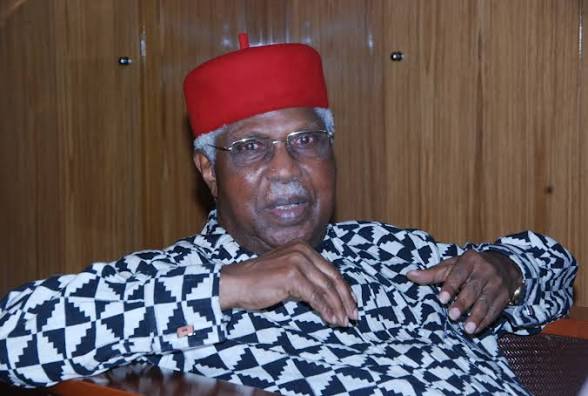
The elders had urged the military leaders in power at the time to transfer authority to Dr Alex Ekwueme, who had successfully organised the politicians and prepared them to assume power from the military.

For those Northern elders, a handover to Ekwueme would have ensured a smooth continuation of the longstanding political partnership between the North and the East.

This relationship had functioned effectively and helped stabilise the country before the soldiers brought it to an end in 1983.

Moreover, they regarded Ekwueme as an excellent choice because he had served as Shagari’s Vice President for four years, acting as a versatile partner in the administration.

But the soldiers resented Dr Ekwueme’s boldness in challenging the military and effortlessly rallying politicians to discredit them.

Instead, they wanted Ekwueme to go for the Senate President position, an offer he rejected outright; not after being number two, turned around years later to go for the number three position.

.
The Generals were also more focused on restoring military solidarity and cohesion, which General Sani Abacha had seriously undermined by imprisoning their two highly respected senior officers, Generals Olusegun Obasanjo and Musa Yar’Adua, the latter of whom died in custody.

For the soldiers, placing Obasanjo, who was not genuinely interested but was persuaded, ahead of Ekwueme addressed two critical problems they had created: appeasing the military community over Obasanjo’s treatment and Yar’Adua’s death, and placating the ethnic Yoruba, who had lost Chief Moshood Abiola in the political crisis.

A senior Northern political leader recently told me about the North’s regret over that political miscalculation.

In 1998, those elders had conveyed the message to the soldiers metaphorically: if you must lend your wife to someone, it should be someone who will cause her the least possible harm by the time she is returned to you.

Looking at the region today and what it has become — a battleground, a centre of poverty production, a visibly divided region, and a political battlefield — is deeply disheartening.

During this political era, the region has produced two presidents, Umaru Yar’Adua and Muhammadu Buhari, and lost both of them. It has also produced three vice presidents: Atiku Abubakar, Namadi Sambo, and Kashim Shettima.

Although all three are alive, they are politically embattled. Nigeria as a whole has remained in a political coma.

After 27 years of uninterrupted so-called democracy, the country has arrived at a Bola Tinubu presidency under which 35 million citizens live below the poverty line, while Nigeria is shamefully ranked among the 60 poorest countries in the world. This is a nation counted among the ten most naturally endowed countries globally, with virtually every valuable resource beneath its soil by God’s design.

Yet, what it abundantly offers the world is unprecedented poverty fueled by unprecedented corruption in high places.

Since this political dispensation began in 1999, Northern leaders have metaphorically held the knife and the yam, deciding when to cut and how much to share with other regions.

Instead of putting the collective interests of the North first, however, individuals have prioritised their personal interests, frequently using religion as a cover while claiming to serve everyone and accumulating wealth.

Because religion, whether Islam or Christianity, cannot by itself produce physical development, the North has remained stagnant in human development during the past 27 years of a Northern Muslim-dominated political hierarchy and has become the poorest region in the country.

Today, five months before the 2027 presidential election, the geopolitical North finds itself at the same crossroads it faced in 1998, ahead of 1999 — this time, in the lead-up to 2027. Peter Obi now occupies the position once associated with Dr Alex Ekwueme, while Bola Tinubu, an Emilekon politician, has taken the place of Olusegun Obasanjo, a retired general.

In the light of these narratives, has the region learned any lessons that will guide better and more pragmatic decisions in its own interest?

Does this present the North with an opportunity to correct the mistake of 1999, or are its leaders still motivated by selfishness and ego?

I am sure these surviving Generals, all in their 80s and already approaching their departure lounges, will appreciate the correction in their lifetime.

If the North now acknowledges that its actions in 1999 established the wrong foundation for democracy — abandoning a more inclusive political trajectory in favour of ethnic and religious ownership of power — is it prepared to correct those wrongs, or will it persist along the same flawed path?

Northern leaders should now examine the paradox of Nigeria’s most politically influential region also being one of its most disadvantaged in human development.

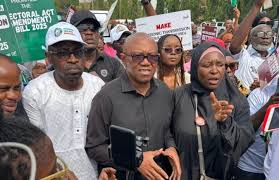
Does the platform of Peter Obi and Rabiu Kwankwaso, the Nigeria Democratic Congress (NDC), offer the much-needed opportunity to correct these mistakes?

Are Northerners prepared to set personal interests aside and reshape Northern politics for the benefit of the wider society?

The central question is this: why do Obi and Kwankwaso appeal to people? Both have demonstrated strong records—Obi with his “consumption to production” philosophy, and Kwankwaso through his emphasis on education, employment, and healthcare.

Their tenures in Anambra and Kano states respectively, where they exercised authority, reflect their dedication to these essential areas of poverty reduction.

When Peter Obi describes Northern Nigeria’s vast landmass as the country’s future source of wealth, he also explains how that potential can be realised—by securing the region, providing employment for idle young people who may otherwise turn to crime, and supporting small businesses.

His claim that Nigeria has no justification for being poor speaks directly to the region’s untapped and underdeveloped resources.

Millions of ordinary Northerners suffer under a self-serving political system. It is reasonable to conclude, without dispute, that Nigeria’s difficulties arise from elites’ political exploitation of the North’s numerical strength, as they convert religion, ethnicity, and poverty into electoral influence without using that influence to promote development.

Next year’s election presents Northern voters with a significant opportunity to choose leaders capable of delivering security, education, employment, productive agriculture, and accountable governance.

This explains why the Peter Obi/Rabiu Kwankwaso ticket resonates with many people in the North today.

Alex Ekwueme, Nigerian former vice president

Former Vice President and the African Democratic Congress (ADC) Presidential flagbearer, Atiku Abubakar’s sentiment of being a Northerner appears not to be resonating not only because it will disrupt the zoning arrangement that is helping to stabilise the polity in the country but also because he belonged to the old brigade that had exploited the region.

While he, like other Northern political leaders, has grown in wealth and fame, the region and majority of its people have been going down.

This Obi-Kwankwaso 2027 project may be the most sensible option for Northern leaders because, in a region burdened by poverty, it echoes John F. Kennedy’s warning: “Those who make peaceful revolution impossible will make violent revolution inevitable.”

People also remember Frederick Douglass’s words: “Power concedes nothing without a demand. It never did and it never will,” but the youths of the North are already demanding it.

Self-serving leaders in the North, like their counterparts in other regions within the ruling APC, who are still living in the past, appear to be overlooking the shortcomings of President Tinubu, including his questionable background, the lack of transparency surrounding his records, and the obvious corruption under his administration.

The main priority of such people is enriching themselves, even when it comes at the people’s expense.

Ultimately, it is therefore necessary at this juncture, while ending this conversation, to remind those who have chosen to ignore the region’s troubling circumstances and who have continued to exploit the North of the counsel offered by South Africa’s renowned cleric, Desmond Tutu, that “If you are neutral in situations of injustice, you have chosen the side of the oppressor.”

And when the time comes to hold the oppressors accountable, no one will be exempt. May God help us.

2027: Gov. Mbah reveals magic behind superlative performance, As Support Group pledges 20,000 canvassers for his re-election bid

Enugu state Governor Dr. Peter Ndubuisi Mbah, has revealed the magic behind his administration’s unprecedented development of every sector of the state’s economy since he assumed office on May 292,023.

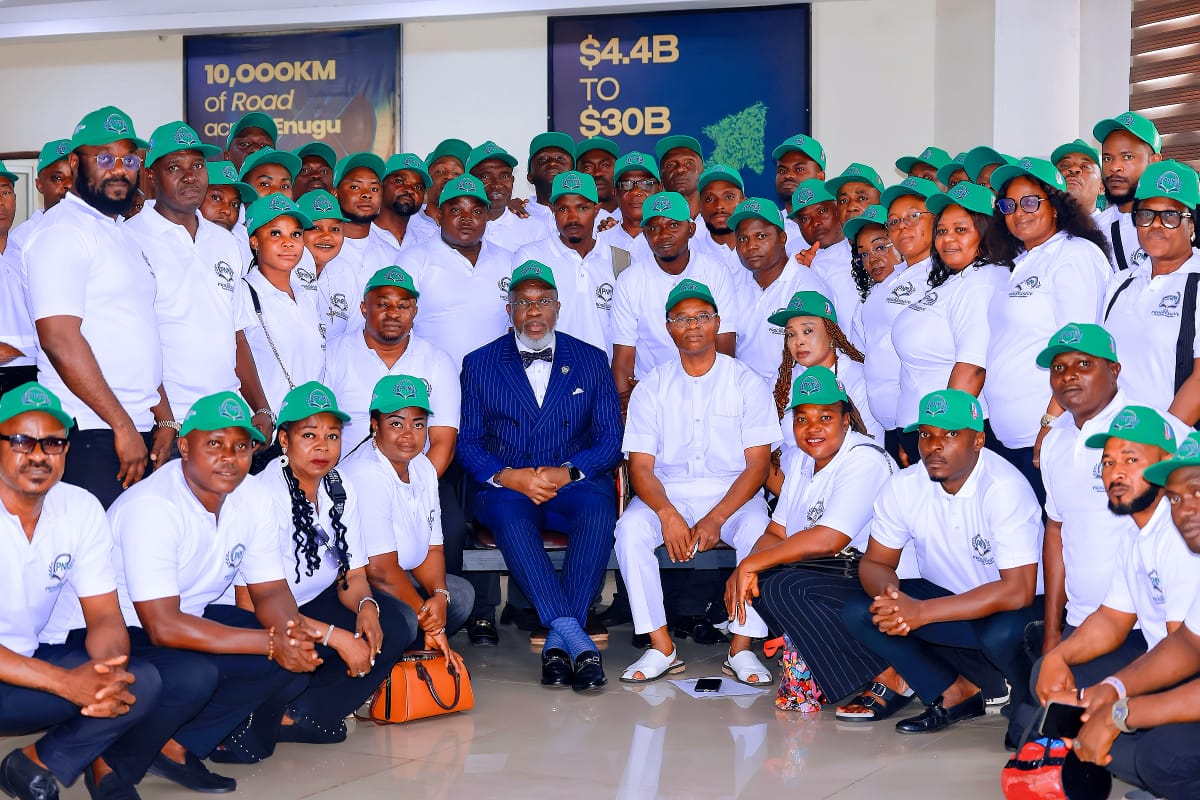
Speaking when about 63 members of the All Progressive Graduates Assembly, Enugu state chapter, paid him a solidarity visit at Government House, Enugu, Gov. Mbah revealed that before he was elected governor in 2023, he had a blueprint on how to transform Enugu from a civil service state to a thriving and sustainable economic hub.

Gov. Mbah who spoke through the Secretary to the State Government Prof. Chidiebere Onyia, emphasized that he did not start preparing how to administer the state after being sworn-in as governor, rather he came prepared beforehand for the job.

“We had different performance metrics to drive our infrastructure growth trajectory. We had different Indicators On the economic side, and we also looked at the sectoral interventions we planned. They were all based on empirical evidence,” revealed the governor.

Said Prof Onyia: “I welcome you on behalf of His Excellency to Government House, Enugu State, as Secretary to the State Government.

” I am excited to meet the leaders of All Progressive Graduate Assembly – our own group, especially because this is an effort that shows that you are motivated to support the governor based on everything you see, and this is really commendable.

“You will recall on the 29th of May 2023, the governor, Dr. Peter Ndubuisi Mbah, made some pronouncements—very audacious pronouncements.

“ People thought they were all political comments, but the governor was prepared before he came into office. He did not start preparing when he became governor, he was already prepared.
“We had different performance metrics to drive our infrastructure growth trajectory. We had different indicators on the economic side, and we also looked at the sectoral interventions we planned. They were all based on empirical evidence.”

Speaking earlier, the lLeader and Patron of the Assembly, Hon. Barrister Nwabueze Ugwu, pledged to mobilise 20,000 graduates across the 17 Local Government Areas of the state, and 580 autonomous communities, to canvass for the re,-election bid of Gov. Mbah.

Barr.Ugwu who is also the Chairman, Governing Council, Enugu state College of Education (Technical), added that the canvassers would carry the message of the good works of the Peter Mbah administration to the grassroots.

He said the group would also advocate for job creation, job placement, internship, skill acquisition, entrepreneurship programme, and empowerment for unemployed graduates in the state.

The delegation included 45 state executive members, and 17 LG Coordinators.

NDC Abia North Stakeholders Meet in Uturu, Adopt ‘Agenda 5/5’ for 2027

Stakeholders of the Nigeria Democratic Congress, NDC, in Abia North Senatorial Zone have resolved to work in unity and adopt a joint campaign strategy ahead of the 2027 general elections.

The strategic meeting was held on Monday, September 1, 2026, at the country home of the party’s Governorship Candidate, Chief Ndubisi Etugo Ogah, in Onuaku, Uturu, Isuikwuato LGA.

The gathering was convened by the State Publicity Secretary, Rtn. Emeka Luis Okoro, MNCS, alongside the Abia North Zonal Chairman, Chief Okoro Okeke. About 40 party leaders, candidates, and members of the State Executive Committee from the five LGAs in the zone attended.

Those present included the Governorship Candidate, Chief Ogah; Senatorial Candidate, Rt. Hon. Uko Ndukwe Nkole; House of Representatives Candidate for Arochukwu/Ohafia, Hon. Ifeanyi Elvis; and State Assembly candidates from Arochukwu, Ohafia North, Bende North, Bende South, and Isuikwuato. Also in attendance were members of the State Working Committee and the five LGA Chairmen.


In his agenda presentation, Rtn. Okoro said the meeting was to foster familiarization, review campaign challenges, and adopt the “Agenda 5/5” for total victory across Abia North.

LGA Chairmen raised grassroots concerns and suggested ways to strengthen mobilization, while senior stakeholders including Hon. Amaechi Chukwu, Mazi Jideofor Kanu, and Hon. Victor Onwumere called for an inclusive campaign structure.

Members of the State Working Committee expressed concerns over exclusion of the committee during LGA tours, unauthorized press releases by candidates’ aides, poor branding of the 5/5 slogan, and low women representation.

Addressing the meeting, Rt. Hon. Uko Nkole stressed the need for discipline and cohesion. He described former presidential candidate, H.E. Peter Obi, as “the major selling point of the NDC” and assured that the “Obi wave” would be fully felt in 2027.

In his remarks, Chief Ndubisi Ogah called for unity, saying the era of internal contest was over. He declared that NDC has come to give Abia North the opportunity to produce the next governor of Abia State, an opportunity denied the zone in 2023.


He also assured stakeholders of adequate logistics and funding for the campaign, and directed all candidates to adopt the 5/5 campaign pattern and joint branding featuring H.E. Peter Obi, himself, his running mate, and all NDC candidates.

The meeting ended with a resolve to strengthen internal coordination and consolidate mobilization structures for 2027.

_Signed:_
_Rtn. Emeka Luis Okoro, MNCS_
_State Publicity Secretary, NDC Abia State_
_September 2, 2026_

2027: Gov. Mbah reveals magic behind superlative performance. As Support Group pledges 20.000 canvassers f

0

Prof Onyia (in suit) Barr. Ugwu on his immediate left, with some members of All Progressive Graduates Assembly, Enugu state chapter.

Enugu state Governor Dr. Peter Ndubuisi Mbah, has revealed the magic behind his administration’s unprecedented development of every sector of the state’s economy since he assumed office on May 292,023.

Speaking when about 63 members of the All Progressive Graduates Assembly, Enugu state chapter, paid him a solidarity visit at Government House, Enugu, Gov. Mbah revealed that before he was elected governor in 2023, he had a blueprint on how to transform Enugu from a civil service state to a thriving and sustainable economic hub.

Gov. Mbah who spoke through the Secretary to the State Government Prof. Chidiebere Onyia, emphasized that he did not start preparing how to administer the state after being sworn-in as governor, rather he came prepared beforehand for the job.

“We had different performance metrics to drive our infrastructure growth trajectory. We had different Indicators On the economic side, and we also looked at the sectoral interventions we planned. They were all based on empirical evidence,” revealed the governor.

Said Prof Onyia: “I welcome you on behalf of His Excellency to Government House, Enugu State, as Secretary to the State Government.

” I am excited to meet the leaders of All Progressive Graduate Assembly – our own group, especially because this is an effort that shows that you are motivated to support the governor based on everything you see, and this is really commendable.

“You will recall on the 29th of May 2023, the governor, Dr. Peter Ndubuisi Mbah, made some pronouncements—very audacious pronouncements.

“ People thought they were all political comments, but the governor was prepared before he came into office. He did not start preparing when he became governor, he was already prepared.
“We had different performance metrics to drive our infrastructure growth trajectory. We had different indicators on the economic side, and we also looked at the sectoral interventions we planned. They were all based on empirical evidence.”

Speaking earlier, the lLeader and Patron of the Assembly, Hon. Barrister Nwabueze Ugwu, pledged to mobilise 20,000 graduates across the 17 Local Government Areas of the state, and 580 autonomous communities, to canvass for the re,-election bid of Gov. Mbah.

Barr.Ugwu who is also the Chairman, Governing Council, Enugu state College of Education (Technical), added that the canvassers would carry the message of the good works of the Peter Mbah administration to the grassroots.

He said the group would also advocate for job creation, job placement, internship, skill acquisition, entrepreneurship programme, and empowerment for unemployed graduates in the state.
The delegation included 45 state executive members, and 17 LG Coordinators.

ECHOES OF TRAUMA: The Cost Of Never Saying No – By Lillian Okenwa

0

_*Sometimes, the people who complain most about what we stopped giving are the very people we spent years teaching to expect everything.*_

There are people who seem to have an endless supply of themselves.

They are the ones family members call when there is a problem, the friends who are expected to come through, the parents who somehow find money when there is none, the siblings who step in when everyone else has run out of options.

Someone needs a favour, a loan, a ride, a place to stay, an introduction, a listening ear or one more thing done, and they find themselves saying yes before they have considered what it will cost.

For a long time, it may not bother them.
Helping people they love can feel natural. They may not even think of what they do as sacrifice. They are simply doing what needs to be done.
Then, gradually, something changes.

The things that once drew a grateful “thank you” become part of the normal arrangement. The extra money becomes money they are expected to find. The favour becomes their responsibility. The time they freely offered becomes time other people feel entitled to. They help nine times and, on the tenth, when they cannot, the conversation is about the one time they failed to show up.

It can leave a person bewildered.
How did everything I have done become so easy to forget?

Perhaps the more difficult question is how the arrangement came to be in the first place.

We often think of boundaries as something other people violate, and sometimes they do. There are people who take advantage of generosity. There are people who know exactly how much they can ask and from whom they can ask it. There are also relationships in which nobody set out to exploit anyone. One person simply kept saying yes, while the other kept getting used to hearing it.

That difference does not make the outcome any less painful.

Human beings learn from repetition. When someone has always been available, their availability begins to feel normal. When someone has always rescued us, we may stop preparing for the possibility that they will not. When a person repeatedly puts our needs ahead of their own, we may begin to assume that our needs should come first.

The giver may not have intended to teach this lesson. But it can still be learned.

Consider a mother who has spent years helping an adult child through one financial difficulty after another. She cuts back on things she would have bought for herself, takes from savings, postpones her own plans and keeps finding a way to help. Perhaps the child is genuinely grateful each time. But years later, another crisis arrives and the mother says she cannot help.

The response is not gratitude for all the times she did. It is disappointment that she will not do it again.

“But you always help me.”

The sadness in that sentence goes beyond the immediate disagreement. It tells us that years of extraordinary effort have gradually become ordinary.

The same thing can happen between siblings. One becomes the family problem-solver and remains in that role long after everyone has grown older. The younger ones call whenever something goes wrong. Bills, emergencies, school fees, family disputes, difficult decisions — somehow, the call always comes to the same person.

Sometimes that person is proud of being dependable.
Sometimes they are exhausted.
Often, they are both.

Friendships can develop the same imbalance. There is the friend who always lends money, always drives, always listens, always makes the plans, always forgives. Nobody may have sat down and decided that this friend would carry more than everyone else. It simply happened through years of accommodation.
Until the day that friend needs something.

And discovers that the people they have spent years helping may not know how to help them.

That realisation can hurt more than the original requests ever did.

It can also produce resentment, and resentment is where the person who has always given may need to be honest with themselves.

Not every resentment means someone has wronged us. Sometimes it is telling us that we have been agreeing to things we no longer want to do.

There is a difference between freely giving and giving while secretly hoping that the other person will notice how much it is costing.

The second kind of giving eventually becomes heavy.

A person may begin keeping an invisible record: The money they gave, the calls they answered, the plans they cancelled, the opportunities they missed, the times they came through when nobody else did.
They may never say any of it aloud.
But they remember.

And when the other person makes another demand, all those memories come rushing back.

After everything I have done for you.
It is an understandable thought. It is also a warning that something has gone wrong.

We cannot give someone a gift and then demand that they understand its value exactly as we do. Nor can we make another person grateful by giving more. There are people who will never notice what we sacrifice for them, no matter how much we sacrifice.

At some point, giving more will not solve the problem. It may make it worse.

This is where the person who keeps bending has to look at their own part in the pattern. Not to take responsibility for another person’s entitlement, but to ask why they have continued long after the arrangement stopped being sustainable.

Perhaps they were afraid of disappointing someone.
Perhaps they were raised to believe that saying no was rude or selfish.
Perhaps they found it easier to help than to deal with someone’s anger when they refused.

Perhaps being the dependable one had become part of their identity.
Or perhaps they simply loved the people involved and could not bear to watch them struggle.

There is compassion in understanding that. But there must also be room for another truth: Love does not require us to become endlessly available.

Sometimes the person who keeps saying yes is not only helping someone else. They are also avoiding something in themselves — the discomfort of disappointing someone, the guilt that comes with refusing a request, the fear that the relationship might change if they stop providing what the other person needs.

So, they keep saying yes; until they cannot.

The first no can be surprisingly difficult.

It may be something as simple as, “I can’t do that this time.”
Yet for someone who has spent years saying yes, those words can feel enormous.

The other person may be confused.
“But you’ve always done it.”
And there it is.

The old expectation has been exposed.

The person who has always accommodated everyone has changed the terms. What they once did willingly is no longer something they are prepared to do every time. The other person may experience that as rejection, even though the giver may simply have reached the point where continuing would come at too high a cost.

This is often when guilt appears.

The giver sees the disappointment on the other person’s face and begins to doubt themselves. They wonder whether they are being selfish. They consider giving in just this once.And sometimes they do.
The immediate discomfort disappears.
The pattern survives.

There is nothing wrong with saying yes to people we love. In fact, some of the most meaningful acts of love involve inconvenience. Parents make sacrifices for their children. Friends show up when it is difficult. Siblings carry one another through hard seasons. Spouses adjust for each other.

The problem is not generosity.
The problem is when generosity ceases to be a choice.

A yes that is freely given means something. A yes given out of fear, guilt or the certainty that there will be consequences for saying no is something else.

And perhaps that is one of the hidden costs of never saying no: Eventually, even we may stop knowing whether our yes means “I want to help” or “I am afraid of what will happen if I don’t.”

There is another cost too.
When we constantly put ourselves last, our own lives can become strangely unfamiliar. We know what everyone else needs. We know who is struggling, who needs money, who needs advice, who needs a favour, who needs us to step in.
But what do we need?

That question can become surprisingly difficult to answer.

Years of accommodation can make self-denial feel like virtue. We may even become uncomfortable when someone offers to help us. We are so accustomed to being the one who carries things that receiving can feel unnatural.

Yet relationships are not meant to be built around one person continually giving and another continually receiving.
At some point, something has to be allowed to change.

That may mean letting an adult child solve a problem without rescuing them. It may mean allowing a sibling to make arrangements without automatically stepping in. It may mean telling a friend that you cannot lend money. It may mean refusing an invitation when you are tired instead of inventing an excuse for why you cannot attend.

It may even mean disappointing someone.
That is one of the things we rarely want to admit about saying no. Sometimes, someone will be disappointed.
We cannot make our boundaries painless for everyone else.

But disappointment is not necessarily harm, and another person’s displeasure is not proof that we have done something wrong.

The person who has always bent may eventually discover that they have been waiting for someone else to give them permission to stop. No one may come.
Sometimes we have to give ourselves that permission. Not because the people we have helped do not matter, but because we matter too.

And maybe there is a lesson here for both sides of the relationship. If someone has always been generous with us, we should not confuse their generosity with an unlimited supply.
We should notice the effort, ask whether they are all right, offer to carry something when we can and understand that their circumstances may change.

And if we are the ones who keep giving, perhaps we should stop waiting for resentment to tell us where our limits are.

We can say no before we become angry.
We can ask for help before we become exhausted.

We can allow someone else to carry a responsibility we have always carried.
We can give without keeping score, but we can also stop giving when the giving is destroying something in us.

Sometimes, never saying no does more than leave us tired. It can teach people that our time is always available, our resources are always accessible and our limits are negotiable.

Then one day, we say no, and everyone wonders what happened to us.
Perhaps nothing happened.

Perhaps we simply stopped bending.
And perhaps the hardest no to say is the one that comes after years of teaching everyone around us to expect a yes.

_*A lawyer and equity advocate, Lillian is the publisher of Law & Society Magazine. She can be reached at Lillianokenwa@gmail.com, : @OkenwaLillian.*_


Gov. Zulum builds, hands over 42-room patients’ apartment to UMTH – From Abdullahi Alhassan/Kaduna

0

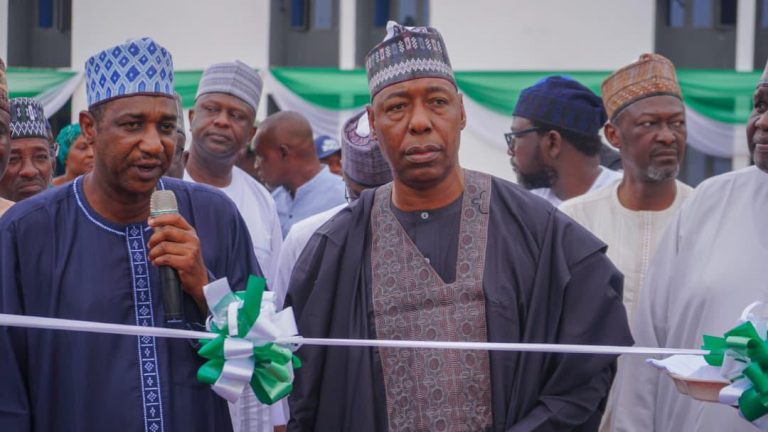
Gov. Zulum(right), commissions the facility

Borno State Governor, Prof. Babagana Umara Zulum, has commissioned and handed over a newly constructed 42-room patients’ apartment to the University of Maiduguri Teaching Hospital (UMTH) as part of his administration’s commitment to improving healthcare delivery in the state.

The facility is designed to provide comfortable accommodation for patients’ relatives and visitors, many of whom travel long distances to access medical care.

The handover of the patients’ apartment is the latest in Zulum’s interventions at UMTH.

The governor had previously presented a N100 million cheque to support the hospital’s funding gaps for medical consumables and other needs.

He also constructed 24 three-bedroom apartments for medical staff to reduce housing shortages and keep doctors closer to patients.

In addition, Zulum has ordered the release of N1 billion in financial support to facilitate kidney transplant and maternal health services at the hospital. He also provided a N500 million intervention following the 2024 flood disaster.

Beyond UMTH, Zulum has extended similar support to other federal government agencies in Borno State. He distributed thousands of patrol vehicles to security agencies and formations to boost security across the state.

Zulum constructed housing quarters and provided several facilities and infrastructure at the University of Maiduguri.

He also approved hundreds of millions in takeoff grants for the National Orthopaedic Hospital, Azare; the Federal Polytechnic, Monguno; and the Federal College of Education, Gwoza.

The chief medical director of UMTH, Professor Ahmed Ahidjo, expressed gratitude to the governor and commended him for his relentless support.

The governor was accompanied by the Acting Chief of Staff, Dr. Babagana Mustapha Mallumbe; commissioners; special advisers; and several senior government officials.

2027: Gov. Mbah reveals magic behind his superlative performance, As Group pledges 20,000 canvassers for his re-election

Prof Onyia(in suit) Barr. Ugwu on his immediate left, with some members of All Progressive Graduates Assembly, Enugu state chapter.

Enugu state Governor Dr. Peter Ndubuisi Mbah, has revealed the magic behind his administration’s unprecedented development of every sector of the state’s economy since he assumed office in 2023.

Speaking when about 63 members of the All Progressive Graduates Assembly, Enugu state chapter, paid him a solidarity visit at Government House, Enugu, Gov. Mbah revealed that before he was elected governor in 2023, he had a blueprint on how to transform Enugu from a civil service state to a thriving and sustainable economic hub.

Gov. Mbah who spoke through the Secretary to the State Government Prof. Chidiebere Onyia, emphasized that he did not start preparing how to administer the state after being sworn-in as governor, rather he came prepared beforehand for the job.

“We had different performance metrics to drive our infrastructure growth trajectory. We had different Indicators On the economic side, and we also looked at the sectoral interventions we planned. They were all based on empirical evidence,” revealed the governor.

Said Prof Onyia: “I welcome you on
behalf of His Excellency to Government House, Enugu State, as Secretary to the State Government.

​” I am excited to meet the leaders of All Progressive Graduate Assembly – our own group, especially because this is an effort that shows that you are motivated to support the governor based on everything you see, and this is really commendable.
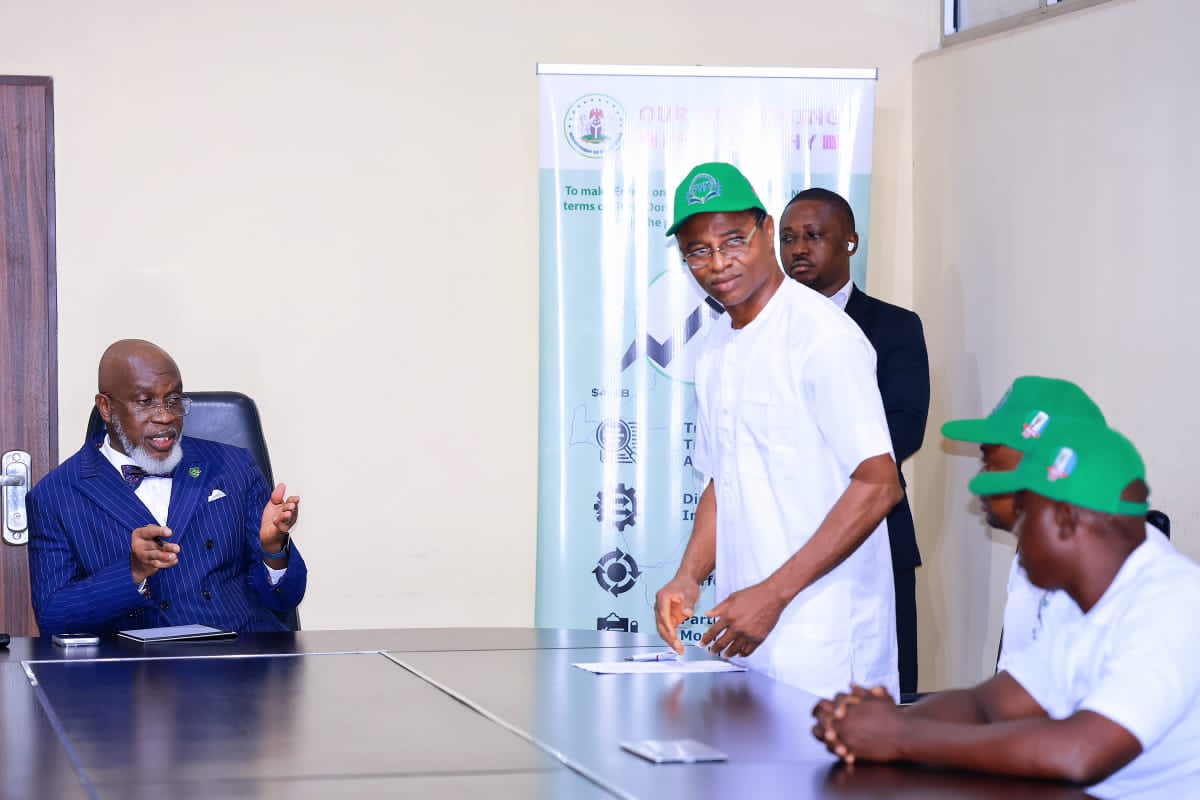
“​You will recall on the 29th of May 2023, the governor, Dr. Peter Ndubuisi Mbah, made some pronouncements—very audacious pronouncements.

> People thought they were all political comments, but the governor was prepared before he came into office. He did not start preparing when he became governor, he was already prepared.

​”We had different performance metrics to drive our infrastructure growth trajectory. We had different indicators on the economic side, and we also looked at the sectoral interventions we planned. They were all based on empirical evidence.”

Speaking earlier, the leader and Patron of the Assembly, Hon. Barrister Nwabueze Ugwu, pledged to mobilise 20,000 graduates across the 17 Local Government Areas of the state, and 580 autonomous communities, to canvass for the re,-election bid of Gov. Mbah.
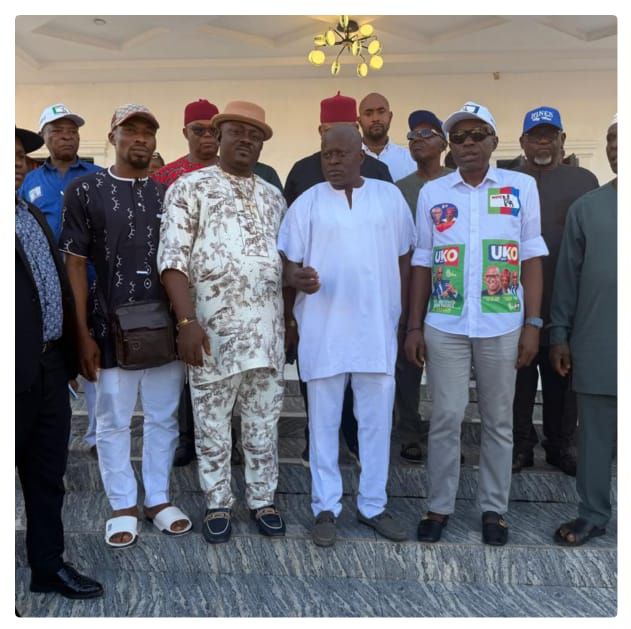
Barr.Ugwu who is also the Chairman, Governing Council, Enugu state College of Education (Technical),added that the canvassers would carry the message of the good works of the Peter Mbah administration to the grassroots.

He said the group would also advocate for job creation, job placement, internship, skill acquisition, entrepreneurship programme, and empowerment for unemployed graduates in the state.

The delegation included 45 state executive members, and 17 LG Coordinators.