


 _
_
BEHIND every fallen soldier is a family left to carry grief, unanswered questions, and a silence the nation has yet to confront.
One can only imagine what happened in the homes of Brigadier Generals Musa Uba and Oseni Braimoh, and in the homes of countless other soldiers, when the news of their deaths filtered through social media and hurried phone calls. News no family should receive that way. News that arrives without preparation, without dignity, without the quiet honour their sacrifice deserves.
How does a wife begin to explain such a loss to her children? What words carry that kind of weight? What do you say when a father who left to defend his country does not return, and the nation he died for feels distant, almost indifferent?
What happens in the heart of a child who must now grow up with questions that have no answers? Questions about duty, about sacrifice, about whether it was all worth it.
There is a kind of silence that follows such loss. Not just grief, but a deeper confusion. A quiet anger. A sense that something fundamental has been broken.
Brigadier General Musa Uba’s death in November 2025 carries its own haunting details. After an ambush near Wajiroko in Borno State between November 14 and 15, he became separated from his troops. For nearly two days, he remained in contact with military headquarters, sending updates about his location and even the state of his phone battery. And yet, before help could reach him, those hunting him did. Reports indicate that insurgents intercepted his communication, tracked him, captured him, and later executed him.
There is something deeply unsettling about that sequence. That a man could reach out to his own command for hours and not be reached in time, but be found by those who meant him harm. One can only imagine what must have gone through his mind in those final moments. The waiting. The hope. The realisation.
He was not just a general. He was a son, a husband, a father, a brother. And somewhere, a family received the news not from those responsible for his welfare, but from the same channels as the public.
The trauma of that kind of loss does not fade. It settles.
On April 9, 2026, Brigadier General Oseni Braimoh was killed during an attack on the 29 Task Force Brigade headquarters in Benisheikh, Borno State. What makes his story particularly painful is the moment just before it ended.
He was on the phone with his twin brother in the United Kingdom. They spoke often, almost ritualistically. That night was no different, until it suddenly was.
In the middle of their conversation, something changed. A pause. A disturbance. Then silence.
Calls that followed went unanswered. Messages were not returned. And somewhere between that silence and the eventual confirmation lay a space filled with dread, disbelief, and the slow arrival of truth.
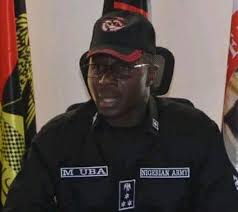
Late Brig.Gn Uba
There are no easy words for that kind of ending. No preparation for it. Only a lingering echo.
These are not isolated stories. From Lieutenant Colonel Abu Ali, killed in November 2016 in Mallam Fatori, to Brigadier General Dzarma Zirkusu in November 2021, to more recent losses in 2025 and 2026, the pattern continues.
. Officers and soldiers fall in a war that seems to stretch endlessly, often under circumstances that raise more questions than answers.
Yet beyond the battlefield lies another, quieter crisis. The families left behind.
Widows who speak of being suddenly alone in a world that no longer makes sense. Children whose education is interrupted, whose sense of safety is fractured, who grow up trying to understand why their father’s sacrifice has not translated into care or security for those he left behind.
There have been protests. In late 2025 and early 2026, widows gathered in Abuja, demanding unpaid benefits, pensions, and entitlements that should have been automatic. Some spoke of years of waiting. Others of promises made publicly but never fulfilled.
There are accounts of eviction from military barracks shortly after burial rites. Of families forced to begin again from nothing. Of children whose futures hang in the balance.
This is where the trauma deepens.
Because loss alone is heavy enough. But abandonment compounds it.
And then there is the other side of the story that many struggle to reconcile.
Since the formalisation of Operation Safe Corridor in 2016 under President Muhammadu Buhari, the Nigerian government has run programmes to rehabilitate and reintegrate former insurgents.
On April 16, 2026, 744 individuals were declared “graduates” of a 24-week deradicalisation programme in Gombe State and released back into society with support packages.
The intention may be strategic. The implications, however, are deeply complex. Over ₦10 billion ($7 million) spent on the rehabilitation and reintegration of “repentant” Boko Haram fighters in the last two years, while their victims are left to their own devices.
For families who have lost loved ones, it raises difficult questions. About justice. About accountability. About what message is being sent.
When those who took up arms against the state are seen to be reintegrated and supported, while the families of those who died defending that same state struggle for basic entitlements, something shifts in the moral balance of a nation.
It becomes harder to speak of sacrifice without hesitation. Harder to speak of patriotism without doubt.
Across the country, insecurity continues to deepen. Between January and April 2026, over 1,100 abductions were reported across northern Nigeria. Entire communities have been attacked, displaced, and left to rebuild from ashes. Children, women, families continue to bear the brunt.
And within this widening crisis, the deaths of soldiers are not just statistics. They are stories that ripple outward, shaping lives far beyond the battlefield.
There is a psychological cost to all of this that is often overlooked.
Families living in what can only be described as emotional suspension. Grieving, yet waiting. Hoping, yet uncertain. Carrying the weight of loss alongside the strain of survival.
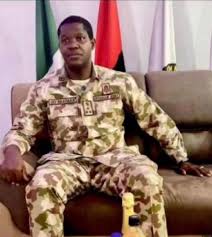
Lat Brig.Gn Braimoh
Children growing up with unanswered questions. With images, stories, and silences that shape how they understand duty, nation, and trust.
When trauma is left unattended, it does not remain contained. It spreads quietly, influencing how individuals relate to society, to authority, to the idea of belonging.
And so the question remains.
What does a nation owe those who defend it.
Not in words. Not in ceremonies. But in action.
Because beyond the medals and the headlines are families trying to make sense of a loss that feels both personal and national. Families who must live with the absence long after the country has moved on.
Until we learn to honour sacrifice not just in death but in how we care for the living left behind, the echoes will remain.
*Okenwa, a journalist, lawyer and Publisher of Law & Society Magazine, could be reached on lillianokenwa@gmail.com*