Sunday, September 13, 2026
No menu items!
Home Blog Page 5

MainPower Commences N3.5bn. DISREP, Network Rehabilitatio. Upgrade ProjectsIn Enugu State

0


THE MainPower  Electricity Distribution Limited (MEDL) has commenced a major ₦3.5 billion network rehabilitation and upgrade programme aimed at improving the quality, reliability and sustainability of electricity supply across parts of Enugu State.

The projects are being implemented under the Distribution Sector Recovery Programme (DISREP), an initiative of the Federal Government of Nigeria supported by the World Bank.

The Managing Director of MainPower, Dr Ernest Mupwaya, told newsmen in Enugu on Thursday that DISREP would strengthen Nigeria’s electricity distribution sector through metering, rehabilitation of critical infrastructure, reduction of technical and commercial losses, and improvement in service delivery.

He said that the first phase of the scope of the projects cover the rehabilitation and upgrading of the following critical infrastructure: the 9th Mile Injection Substation; the 9th Mile Industrial Feeder; and the Coca-Cola 33 kV Feeder.

“It will also cover installation of seven new 500 kVA, 11/0.415 kV distribution transformers; rehabilitation of 10 existing 500 kVA distribution transformers; and provision of 11 kV switchgear to improve system protection, control and operational flexibility.

“The works are expected to be completed within five weeks. Contractors will work daily, including weekends, to ensure timely delivery,” he said.

The managing director stressed that a major component of the project is the upgrade of the approximately 28-kilometre Coca-Cola 33 kV Line running from the Oji River Transmission Station to the 9th Mile Injection Substation.

“The line, which currently operates on a 50mm² aluminium conductor single circuit, will be upgraded to a 150mm² Aluminium Conductor Steel Reinforced (ACSR) double circuit.

“The upgraded line will have a combined design thermal transfer capability of up to 36MW, subject to prevailing system conditions, voltage regulation and other operational requirements.

“The additional capacity will strengthen electricity supply to the 9th Mile industrial axis and support existing and prospective industrial customers,” he said.

Mupwaya said that the beneficiaries would include the following companies: Sapphire, 7-Up, Honest Material, Coca-Cola, Wisdo, Enugu Water Works and others, as well as customers supplied through the 11 kV industrial feeder.

He noted that the project would also relieve the Kingsway 2 Line, which serves Ogui and the Hilltop axis, thereby improving network flexibility and reliability in those areas.

On the 9th Mile Power Corridor, he noted that the existing undersized 70mm² aluminium conductor on the 9th Mile 11 kV industrial feeder would be replaced with a 150mm² aluminium conductor from the injection substation.

He said, “This upgrade will address existing capacity constraints, reduce technical losses, improve voltage profiles and create additional capacity to accommodate growing industrial and commercial demands.

“Upon completion, the project is expected to significantly improve electricity supply to customers in Udi and Ezeagu Local Government Areas, including: 9th Mile industrial hub; the Free Trade Zone; Ezeagu industrial cluster; Abor; Ajali; and surrounding communities.”

The MainPower boss said that the rehabilitation programme forms part of MainPower’s broader commitment to strengthening the electricity distribution network and providing the infrastructure required to support industrial growth, business expansion and improved socioeconomic activity across Enugu State.

He also explained that in order to provide a safe working environment and facilitate the efficient execution of the works, scheduled outages would occur during the five-week construction period.

“The outages will generally take place between 8a.m. and 2p.m., during which electricity supply to affected customers will be temporarily interrupted.

“MainPower appreciates the operational implications of these outages, particularly for industrial and commercial customers, and appeals for their patience, understanding and cooperation.

“The temporary disruptions are necessary to enable the rehabilitation works to be completed safely and within the planned timeframe,” he said.

Mupwaya noted that the rehabilitation would require the clearance of structures and commercial activities encroaching on the statutory powerline right-of-way, adding that such encroachments would be addressed in accordance with applicable safety requirements and established procedures.

“Customers and members of the public are advised not to erect structures, operate businesses or undertake any activity within powerline rights-of-way.

“These corridors must remain clear to protect lives, facilitate maintenance and ensure the safe operation of electricity infrastructure,” he said.

He also appealed to customers and members of communities within the projects corridor to protect the new electrical installations and give contractors maximum cooperation to deliver the work as scheduled.

A Fitting Tribute To Chima Ubani: CommendationTo Gov. Alex Otti – By Okechukwu Nwanguma

0


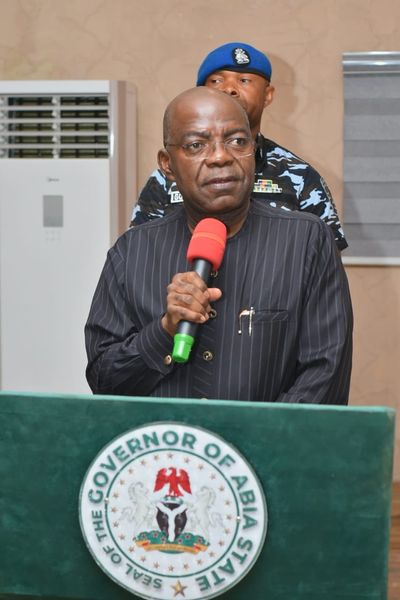
A very big commendation to the Governor of Abia State, His Excellency Dr. Alex Otti, for this remarkable and deeply meaningful gesture of honouring the memory of the late Chima Ubani by renaming the newly remodelled and digitally equipped 80-bed Obingwa General Hospital after him.

This is much more than the naming of a public institution. It is a recognition of the patriotic sacrifices made by Chima Ubani in the struggle for the restoration of democracy, the defence of human rights, the rule of law and the entrenchment of good governance in Nigeria.

Chima did not merely speak about these ideals. He lived them. He stood with the oppressed and challenged injustice at considerable personal risk.

As a student leader and later as a leading human rights and pro-democracy activist, he devoted his life to the belief that Nigeria could and should become a democratic society in which human dignity, justice and accountable government are respected.

By naming a hospital after Chima, Governor Otti has done something particularly significant: he has connected Chima’s legacy of service to humanity with an institution dedicated to preserving and improving human life.

That symbolism should not be lost on us.

Chima Ubani died in the course of the struggle for the democratic ideals he believed in. His death was a profound loss to his family, his colleagues, the human rights community and Nigeria’s democratic movement.

Governor Otti’s gesture sends an important message: the sacrifices of those who fought for democracy must not be forgotten, and their values must continue to inspire public service.

In this sense, Chima did not die in vain.

The greatest tribute to a person who sacrificed for good governance is not merely a monument or inscription bearing his name. It is to build the kind of society for which he struggled – to provide dignity to ordinary citizens, protect human rights, strengthen institutions and ensure that government works for the people.

It is, therefore, particularly fitting that Chima’s name now adorns a hospital dedicated to saving lives and providing healthcare to ordinary citizens.

That is the kind of living memorial that matters.

I commend Governor Alex Otti for recognising Chima Ubani’s contribution to Nigeria’s democratic journey and for preserving his memory in such a practical and socially meaningful way.

I also commend the people and Government of Abia State for ensuring that the legacy of one of their illustrious sons continues to occupy a place in the public consciousness.

May the Chima Ubani Memorial Hospital not only save lives but continually remind present and future generations that democracy, justice, human rights and good governance were built and defended by Nigerians who were prepared to make extraordinary sacrifices for the common good.

May Chima’s memory continue to inspire courage, integrity, service and commitment to the Nigerian people.

Chima Ubani did not die in vain. His struggle lives on.

Okechukwu Nwanguma, is the
Executive Director, Rule of Law and Accountability Advocacy Centre (RULAAC)

National Health Fellows Programme Graduates 17, To Strengthen Healthcare In Enugu.

0

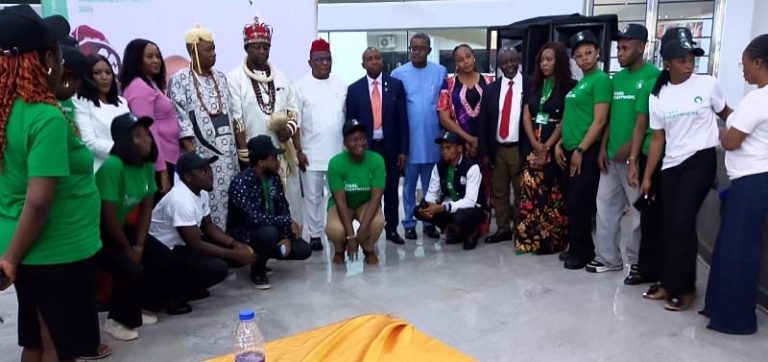
SEVENTEEN Cohort One trainees of the National Health Fellows programme have graduated from one-year community healthcare training and deployed to strengthen healthcare in Enugu State.

The National Health Fellowship is a flagship programme of the Federal Government, implemented under the Nigeria Health Sector Renewal Investment Initiative through the Sector-Wide Approach (SWAP) Coordination Office of the Federal Ministry of Health and Social Welfare.

Presenting the certificates to the graduating trainees of the programme on Wednesday in Enugu, Gov. Peter Mbah commended President Bola Tinubu for initiating, supporting and funding the training to boost healthcare service delivery nationwide.

Represented by Commissioner for Labour and Employment, Dr Felix Nnamani, the governor said that Tinubu had shown practical concern for health and well-being of Nigerians living in rural areas where many Nigerians reside.

He thanked the Ministry for Health and Social Welfare for pulling the training through as well as appealed for more synergy with the Federal Government on manpower training and provision on amenities.

“This event is a clear commitment of Federal and Enugu State Governments to address the gap in healthcare services delivery especially in healthcare workers’ attitudinal change to ensure better outcomes for Nigerians especially residents of the state.

“As a state, we have expanded all we do in the healthcare sector to ward and community levels, and we needed this trainees to ensure quality healthcare gets to our people notwithstanding their locations in the state,” he said.

The governor congratulated the graduating trainees and charged them to be focused and dedicated to their duties to the citizens and humanity.

Speaking, the Commissioner for Health, Prof. George Ugwu, noted that the graduating trainees, who are fresh hands, had been trained to ensure resilience and better healthcare service delivery and outcomes.

“As a ministry, we appreciate President Tinubu and Gov. Mbah for ensuring all we do in our health system and facilities within the state are linked with the national through these graduating trainees who will raise the red flags.

“The graduating trainees will be embedded in our over 260 PHC centres across our ward and community levels to monitor staff commitment, punctuality and quality of care as well as availability of drugs, basic consumables and others.

“We are also thanking President Tinubu and the minister for already engaging you into the civil service; while within available resources we will assist to provide support to enable you carry out your job seamlessly,” he said.

Earlier,, the SWAP Desk Officer Enugu State Ministry of Health, Mrs Ujunwa Ewoh, noted that the programme is designed to strengthen leadership, management capacity and accountability within the Nigerian health system.

  1. The programme has trained young health professionals, one from each of the 17 council areas in the state, who would work closely with state and local healthcare systems/facilities to ensure prompt and quality service delivery,” Ewoh said.

She noted that the graduating trainees had undergone intensive training on leadership and people management, public health and health service delivery, financial management and data management among others.

Goodwill messages were received from the Executive Secretary of Enugu State Primary Health Care Development Agency, Dr Ifeyinwa Ani-Osheku
and the Executive Secretary of Enugu State Universal Basic Health Insurance Scheme, Dr Edith Okolo, among others.

The highpoint of the event was the governor’s unveiling of another set of 17 youths from the 17 council areas of the state to undergo another one-year intensive community healthcare training under Cohort 2 National Health Fellowship Programme.

ABER, University Of Bamenda Partner On Blue Economy Research, Youth Development

From Right Senior Barr. Nana. Captain Lumumba. and Barr. Kwenji

The Africa Blue Economy Roundtable (ABER) has commenced discussions with the University of Bamenda to advance Blue Economy research and youth capacity building.

The engagement, held in Bamenda on Tuesday, is part of efforts to strengthen institutional partnerships and promote sustainable Blue Economy development in Cameroon’s North West Region.

The meeting was led by Capt. Patrice Lumumba, ABER Regional Facilitator for the Economic Community of Central African States (ECCAS)/Economic and Monetary Community of Central Africa (CEMAC).

Others at the meeting included Senior Barr. Nana Suh Wilson, Principal Partner, NANA & Associates Law Firm, and Junior Barr. Kwenji Neville of the same firm.

The stakeholders resolved to formalise collaboration with the University of Bamenda in Blue Economy research, policy dialogue and youth capacity development.

The proposed partnership will also support the establishment of Blue Clubs in schools across the North West Region.

The Blue Clubs are expected to promote awareness of sustainable management and utilisation of Africa’s oceans, rivers, lakes and other waterways.

Barristers Nana Suh Wilson and Kwenji Neville also agreed to serve as legal resource persons on ABER’s continental networking platforms.

In addition, Senior Barr. Nana Suh Wilson accepted to serve as ABER Regional Coordinator for Cameroon’s North West Region.

In his new role, Wilson will coordinate stakeholder mobilisation, provide legal advocacy and facilitate ABER programmes across the region.

The stakeholders expressed support for ABER’s initiative and pledged to promote sustainable utilisation of Africa’s aquatic resources.

Speaking after the meeting, Capt. Lumumba commended the legal team for its warm reception and commitment to the Blue Economy agenda.

He described the engagement as a significant step towards strengthening and localising the Blue Economy conversation in Cameroon’s North West Region.

ABER, a flagship initiative of the BRACED Tourism Promotion and Development Initiative (BTPDI), seeks to build a voluntary, continent-wide network of Blue Economy experts and stakeholders.

The initiative aims to support Africa’s transition from resource extraction to value creation across its oceans, rivers and lakes.

It also seeks to promote sustainable economic opportunities that can enhance prosperity, livelihoods and the wellbeing of Africans.


ECHOES OF TRAUMA: The Trauma Of Being The Strong One – By Lillian Okenwa

0


_*Everyone knows who to call when life falls apart; few people remember to ask how the person they called is holding up.*_

_*By Lilllian Okenwa*_

Someone is always calling them.

WHEN the rent cannot be paid, someone knows who to call. When a child gets into trouble, someone has to step in. When a family loses a parent, an older sibling may suddenly find themselves responsible for everyone else.

At work, there is the colleague who can be trusted with the difficult assignment. In the neighbourhood, there is the person who knows who to contact when something goes wrong. In church, there is the person people approach when they need counsel or prayer.

They are the people others depend on.

Over time, however, dependability can become an expectation. The family knows who will step in. Friends know who will answer the phone. Colleagues know who will take responsibility when a difficult task comes up.

The person may be praised for being strong, reliable or capable, but those descriptions can carry a weight of their own when they begin to suggest that this person should always have something left to give.

Who checks on the person everyone calls?

That question is easy to overlook. We see the person solving the problem, paying the bill, making the decision, offering advice or holding the family together. We see what they do for everyone else. Their own difficulties may remain outside the picture.

This is not always the result of neglect. Sometimes people simply become accustomed to someone’s strength. A mother who has spent years keeping a household together may become the obvious person to call whenever a crisis arises.

A father who has always provided may feel like the natural solution to every financial problem. An older sibling who assumed responsibility after the death of their parents may continue carrying the family long after the immediate crisis has passed.

The role becomes familiar. The person behind it can disappear.

Think about the mother who receives the call whenever something goes wrong with the children. A school problem, a quarrel between siblings, an unexpected bill, a difficult decision — somehow, Mum is expected to know what to do.

The same can happen with fathers. When there is a financial problem, a broken appliance, a family dispute or an emergency at the hospital, Dad is often expected to find a solution.

Parents can spend years being the people who answer questions while rarely being asked about their own.

They have worries too. They worry about money, their children’s choices, ageing, work, marriage and the future. They may carry fears they do not share with their children, partly to protect them and partly because they have become accustomed to managing things themselves.

A mother who has spent years answering, “What should we do?” may find it difficult to say, “I don’t know.”

A father who has always been expected to provide may hesitate to admit that he is worried about how to keep providing.
Neither is a failure of strength. They are simply signs that the person everyone relies upon has needs as well.

For some people, the role arrives before adulthood has properly settled in.
A parent dies, and the family has to adjust to a loss that has changed everything. Younger brothers and sisters are grieving. Bills still have to be paid. School continues. Decisions have to be made. Someone has to speak to relatives, make arrangements and reassure the younger ones that things will work out.

The eldest child may be grieving too.
Yet there may be little room for that grief.
They have become the person others are watching.

So they keep moving. They organise what needs to be organised, return to work, worry about school fees, make difficult decisions and try to give their younger siblings a sense of security. They may do it remarkably well, and years later, people may still remember how strong they were at a terrible time.

What they may not remember is that the person holding everyone together was also grieving.

When responsibility arrives in the middle of loss, grief can be pushed aside simply to make room for what needs to be done. Sometimes the effects remain long after the immediate crisis has passed.

The older sibling who became the family’s backbone may continue to carry that identity for years. Even when the younger ones have grown up, married and established their own lives, the expectation can remain: You are the one we look to.

The pattern is not confined to families.

Every workplace has people who become dependable in ways that go beyond their job descriptions. They take on difficult assignments, stay late when something goes wrong, help colleagues find their feet and become the person management calls when a problem needs urgent attention.

Communities have them too. They organise meetings, settle disputes, help people find assistance and somehow know who to contact when an emergency occurs. Friends may have their own version of the same person: the one who listens, gives sensible advice and can be trusted when things become complicated.

Spiritual leaders can also find themselves in this position. People bring them marital problems, grief, financial worries, family conflicts and questions about faith. The fact that someone offers guidance does not mean that they have no questions of their own. A spiritual leader can become tired, uncertain or in need of counsel without becoming less capable of serving others.

The same is true of doctors, lawyers, teachers, business owners and many others whose work involves carrying responsibility for people.

Competence can make suffering difficult to see.

A person can meet deadlines, attend meetings, answer messages and keep showing up while struggling with something they have told no one.

The problem becomes more complicated when being dependable starts to feel like an identity.

People praise you for being the one who always comes through. They tell others they can count on you. They call you when they need help and thank you for always being there.

Those things can feel good. Being useful to the people we love can be deeply satisfying.
But there can be a point where the praise creates an expectation that becomes difficult to escape.

What happens when saying “I can’t” feels like letting everyone down?
What happens when asking for help feels unfamiliar?

What happens when rest brings guilt because there is always someone else who needs something?

A person who has spent years giving advice may not know how to ask for it. Someone who is accustomed to supporting others may struggle to admit that they need support. The person who has always found solutions may feel embarrassed by a problem they cannot solve alone.

Sometimes, it is not pride that keeps people from asking for help. They simply have no practice at being the one who needs it.

And there is another possibility worth considering. When someone is valued mainly for what they provide, they may begin to wonder whether they would still be valued if they stopped providing it.

That is a difficult place to live.

Most of us can think of someone like this.

The woman who remembers everybody else’s birthdays but rarely talks about her own worries. The man everyone calls when money is tight. The older one who became responsible for siblings after their parents died. The colleague who never seems to miss a deadline. The friend who listens to everyone else’s relationship problems. The person who is always available when someone needs a favour.

We know what these people can do for us.

How well do we know what they carry?

Not every dependable person is struggling. Not every strong person is lonely, and it would be unfair to assume that everyone who takes responsibility is secretly falling apart. Many people have supportive families, close friendships and healthy ways of dealing with pressure.

Still, competence should not be mistaken for immunity.

A simple call can sometimes matter more than we realise. Ask Mum how she is doing when there is no family problem to solve. Call Dad without needing money or advice. Check on the older sibling who has spent years looking after everyone else.

Ask the friend who always answers your calls whether they have had a difficult week. If a spiritual leader, colleague or community volunteer comes to mind, ask about the person rather than the role they perform.

And when someone says they are fine, there are times when it is worth staying in the conversation a little longer.

Not to force them to talk, but to let them know that they do not have to protect everyone else from their own humanity.

We are often quick to identify the person we can depend on. We know who will lend the money, make the decision, sit at the hospital, organise the funeral, settle the disagreement, offer the prayer or tell everyone else that things will be all right.

What we may not notice is how often that same person is carrying something of their own.

The answer is not to stop being strong. Families need responsible people. Communities need dependable people. Children need parents who can provide stability. Organisations need people who can be trusted. Faith communities need leaders who can serve.

The answer is to remember that responsibility does not cancel vulnerability.

The person who gives good advice may need advice. The one who offers comfort may need comfort. The one who pays the bills may have financial fears. The person who reassures everyone else may sometimes need reassurance.

We do not have to wait for the strong one to collapse before we notice them.
Sometimes we can simply ask.
Not because we need something.
Not because there is a problem to solve.
Just to know how they are doing.

After all, the person everyone calls when life falls apart is still a person. They also need somewhere to take their own burdens, someone who will listen without expecting an answer, and relationships in which they can put down the role for a while and simply be themselves.

*A lawyer and equity advocate, Lillian is the publisher of Law & Society Magazine. She can be reached at Lillianokenwa@gmail.com X: @OkenwaLillian.*


NSCDC Arrests Suspect For Swindling 16 Job Seekers N6.1m in Enugu

0


THE Nigeria Security and Civil Defense Corps (NSCDC) has arrested a suspect for allegedly swindling 16 job seekers within Enugu metropolis.

The Commandant of NSCDC Enugu State Command, Dr Elijah Willie, disclosed this while briefing journalists on the arrest and investigation on Monday.

Willie said that the suspect collected a total of N6,139,000 from the ignorant and unsuspecting job seekers.

He said that the suspect, Mrs Serah Onyemerela, had been evading arrest by many security agencies until a resourceful officer of the command tracked her down and brought her to the Command.

The Commandant said that the suspect collected the sum of N306,000 from each of the 16 job seekers in the alleged job racketeering or job scam,which totalled N6,139,000.

“On August 12 and 18, 2026, Mrs Love Nnenna Onyema and Mrs Chidimma Ubah, the complainants, reported that Mrs Serah Uchechukwu Onyemerela, the suspect, defrauded them of N770,000 and N424,500 respectively.

“This amount to a total of N1,194,500 from both. However, the ones collected among the remaining people that made up the 16 job seekers at N306,000 each totalled N6,139,000.

“The suspect allegedly promised to assist the complainants in securing employment at the University of Nigeria Teaching Hospital (UNTH).

“However, there is evidence indicating a lack of genuine intent, as there are no current job vacancies available, and the suspect has failed to refund the amounts as promised,” he said.

Willie said that on Aug. 17, 2026, the suspect was summoned, tracked and subsequently detained due to her inability to fulfil the conditions of an administrative bail application facilitated by the NSCDC Enugu State Command.

“The suspect has since confessed to the charges of job fraud and obtaining money under false pretences.

“The funds were transferred to a personnel account linked to Mrs Onyemerela Serah Uchechukwu,” he said.

The Commandant also warned job seekers and people seeking for help in any form to ensure no one places them in a condition to pay first before rendering a help.

Willie called on Nigerians, enlightened or not, to see the red flag that any help being offered even in prayer houses and money payment comes before the job or help is “total fraud”.

He said, “Our people should get wise like people in advance world and stop falling prey to swindlers and wicked people who are bent on taking the little they have from them.

  • “However, the NSCDC has a mandate to take away these unscrupulous elements out of the society for Nigerians to experience peace as well as the trust and bond in the society continue.”

The suspect would be handed over to the Economic and Financial Crime Commission (EFCC) soon as the NSCDC conclude its preliminary investigations on the matter.

Gov. Mbah Ends ASUU-ESUT 2-Week Strike, Approves 2025 FGN/ASUU Agreement, Increases Subvention

.THE Academic Staff Union of Nigeria Universities, Enugu State University of Science and Technology (ASUU-ESUT) branch on Monday, August 24, suspended its 2-week warning strike, and called on its members to immediately return to their duty posts to enable students resume academic activities in earnest.
.
The suspension of the industrial action was sequel to the intervention of the Visitor to the university and Governor of Enugu state Dr. Peter Ndubuisi Mbah.
The intervention led to the signing of the Tripartite Memorandum of Understanding (MoU) on August 20, 2026 between the Enugu State Government, ESUT Management, and ASUU-ESUT.
.
.
Announcing this development at a press conference in Enugu on Monday, Dr Andrew C. Apeh, the. Chairman, ASUU-ESUT disclosed that the National Executive Council (NEC) of ASUU has deliberated on the terms contained in the agreement.
.
He said:  “In line with our Union’s principles of negotiation, collective bargaining, and due process, NEC has granted approval for ASUU-ESUT to suspend the ongoing industrial action with immediate effect, in deference to the commitments secured and to the plea of our Visitor.
.
“The suspension is, therefore,  contingent on the good faith implementation of all items contained in the MOU. The Union will remain vigilant and shall constitute a monitoring mechanism to ensure strict adherence to timelines and deliverables as agreed.
.
The key highlights of the MoU are as follows:-
.
1. Implementation of the 2025 FGN/ASUU Agreement in ESUT with phased rollout commencing 1st September, 2026 and concluding 23rd January, 2027.
.
2. Increased Monthly Subvention to ESUT by #115,000,000.00, raising the total to #276,000,000.00 to support salary and welfare obligations.
.
3. Establishment of a Joint Implementation Committee chaired by the Secretary to the State Government to oversee and perfect all components of the agreement.
.
4. Review and Liquidation of EAA Arrears and other outstanding staff entitlements, with a commitment to institutional financial accountability.
.
5. Immediate Remittance of Third-Party Deductions totaling over N31m to ASUU-ESUT and NUPEMCO accounts.
.
“ASUU-ESUT acknowledges the decisive intervention of the Enugu State Government under His Excellency, Dr. Peter Ndubuisi Mbah. The approval to domesticate the 2025 FGN/ASUU Agreement and the immediate increase in subvention represent a significant step toward addressing long-standing welfare issues in ESUT.
.
.
“We also note with appreciation the directive of Government to ESUT Management against any victimization of Union members or leaders on account of Union activities. This aligns with the core democratic tenets of our Union.
.
“This development is historic for the South East. For context, during the implementation of CONUASS in the past, the South East Zone was the last to comply. Today, Enugu State has taken the lead in committing to the full implementation of the 2025 Agreement. This provides a new template for industrial harmony in the zone.
.
“The Union also appreciates NEC of ASUU for its steadfast guidance, solidarity, and timely intervention throughout the period of the struggle.
.
“The ball is now in the court of all parties to ensure faithful implementation. ASUU-ESUT expects full compliance without delay or deviation.
.
“Congress will reconvene to review progress at the appropriate time.
.
“We call on all members to return to their duty posts and for students to resume academic activities in earnest.”

ABIA @ 35: Redefining The Future Of God’s Own State With Thanksgiving – By Ebere Uzoukwa PhD


AS Abia State marks its 35th anniversary, the decision by the State Government to commence the celebrations with an Interdenominational Service is not only appropriate but deeply significant.

It provides Abians an opportunity to pause, reflect on the journey of the state, give thanks to God for His grace and seek divine guidance as the state advances towards a brighter future.

The service, scheduled for Sunday, August 23, 2026, at the Okpara Square Event Centre in Umuahia, offers a fitting platform for collective thanksgiving and rededication.

For three and a half decades, Abia has experienced a chequered history characterised by periods of poor leadership, weak governance and missed opportunities that slowed the pace of development and denied the people the prosperity they deserved.

Despite its enormous human and economic potential, the state struggled for years to translate these advantages into meaningful development. The situation appeared particularly painful to many Abians who believed that their state had consistently fallen short of its potential.

Against this background, the emergence of Governor Alex Chioma Otti, OFR, in 2023 can be viewed as a significant turning point in the history of the state. After his electoral efforts in 2015 and 2019 were frustrated, his eventual victory in 2023 represented, to many Abians, a remarkable intervention that opened a new chapter for the state.

. His emergence ended years of political disappointment and created an opportunity for Abia to pursue a fundamentally different model of leadership anchored on accountability, competence, prudent management of public resources and development.

Since assuming office, Governor Otti’s administration has embarked on a transformation agenda that has begun to change the narrative about Abia.

Across critical sectors, the government has pursued infrastructure renewal, improved healthcare and education, economic development, investment promotion, urban regeneration, transportation reforms and initiatives designed to create opportunities for the people.

The emerging changes have strengthened the confidence that Abia can finally break away from the cycle of underdevelopment and take its rightful place among Nigeria’s economically vibrant states.

Perhaps more importantly, the Otti administration has restored a sense of dignity and guaranteed hope among Abians. Governance is increasingly being viewed not merely as the occupation of public offices but as a responsibility to serve the people and create an environment in which the people, businesses and investors can thrive.

The renewed emphasis on projects and policies capable of producing measurable improvements in the lives of the people is helping to reposition Abia as a state with a future rather than one perpetually defined by its past.

The significance of Abia’s 35th anniversary therefore goes beyond celebration hence it is an opportunity to acknowledge how far the state has travelled, recognise the challenges that shaped its past and appreciate the emerging transformation that is redefining its future.

It is also a moment to encourage Abians to collectively support the ideals of good governance, peace, unity, accountability and sustainable development that are necessary to consolidate the gains being recorded.

As a state known as the God’s Own State, the anniversary in all ramifications provides an appropriate moment to return to God in thanksgiving. The Interdenominational Service should therefore be seen as an opportunity for Abians to thank God for preserving the state through its difficult years, for the peace and progress being witnessed today and for what many regard as the divine hand in bringing about a new leadership direction in 2023.

At 35, Abia stands at an important crossroads, with an opportunity to permanently redefine its story. The task before Abians is to preserve the gains of the present, deepen the culture of responsible governance and work together for an even more prosperous future

As the people gather in thanksgiving, they can confidently look ahead with renewed hope that God’s Own State, under purposeful leadership, can fulfil its enormous potential and become a model of development, economic growth, dignity and prosperity.

Dr. Ebere Uzoukwa is the Senior Special Assistant to the Governor of Abia State on Public Affairs.

Reps member lauds peaceful Ebonyi council polls, amidst boycott by opposition parties. -From- Paulinus Ogbonna

The lawmaker representing Ohaozara/Onicha/Ivo Federal Constituency, Chief Nkemkanma Kama, has commended the peaceful conduct of Ebonyi local government elections.

Kama expressed satisfaction with the voting process after casting his ballot at Amaze Central School, Polling Unit 013, Ishiagu, Ivo Local Government Area, on Saturday.

He said that the turnout recorded at polling units he visited indicated strong interest among residents in local government administration.

“You can see that people are still coming out to vote; that means people are interested in what we’re doing, they are certainly interested in local government,” Kama said.

The lawmaker expressed confidence that the All Progressives Congress (APC) would emerge victorious, urging all candidates to prioritise the welfare and development of the people.

He, however, rejected the assertion that the election was a one-party contest, saying no political party or individual was prevented from obtaining nomination forms or participating in the poll.

He further attributed the absence of opposition parties participating in the election to the decision of opposition parties and candidates, rather than any action by the APC.

“Anybody who wanted to contest was free to approach Ebonyi State Independent Electoral Commission (EBSIEC) and obtain the necessary forms,” he said.

Our correspondent reports that the election witnessed a boycott by registered opposition political parties in the state resulting in APC candidates contesting without significant opposition in all the local government areas.

Kama urged successful candidates to remain committed to serving the people and work within the structure of their political parties.

He also advised elected officials to await appropriate directives from their party leadership on subsequent political activities.

The election, conducted across the 13 local government areas of Ebonyi, generally witnessed peaceful voting and appreciable voter turnout.

It however was boycotted by registered opposition political parties.

The development granted the APC candidates smooth sail in the election. ENDS//